
Fermentable Carbohydrates and Intestinal Gas Formation

Scientific exploration of FODMAPs, bacterial fermentation, and gas production mechanisms in the gastrointestinal tract.

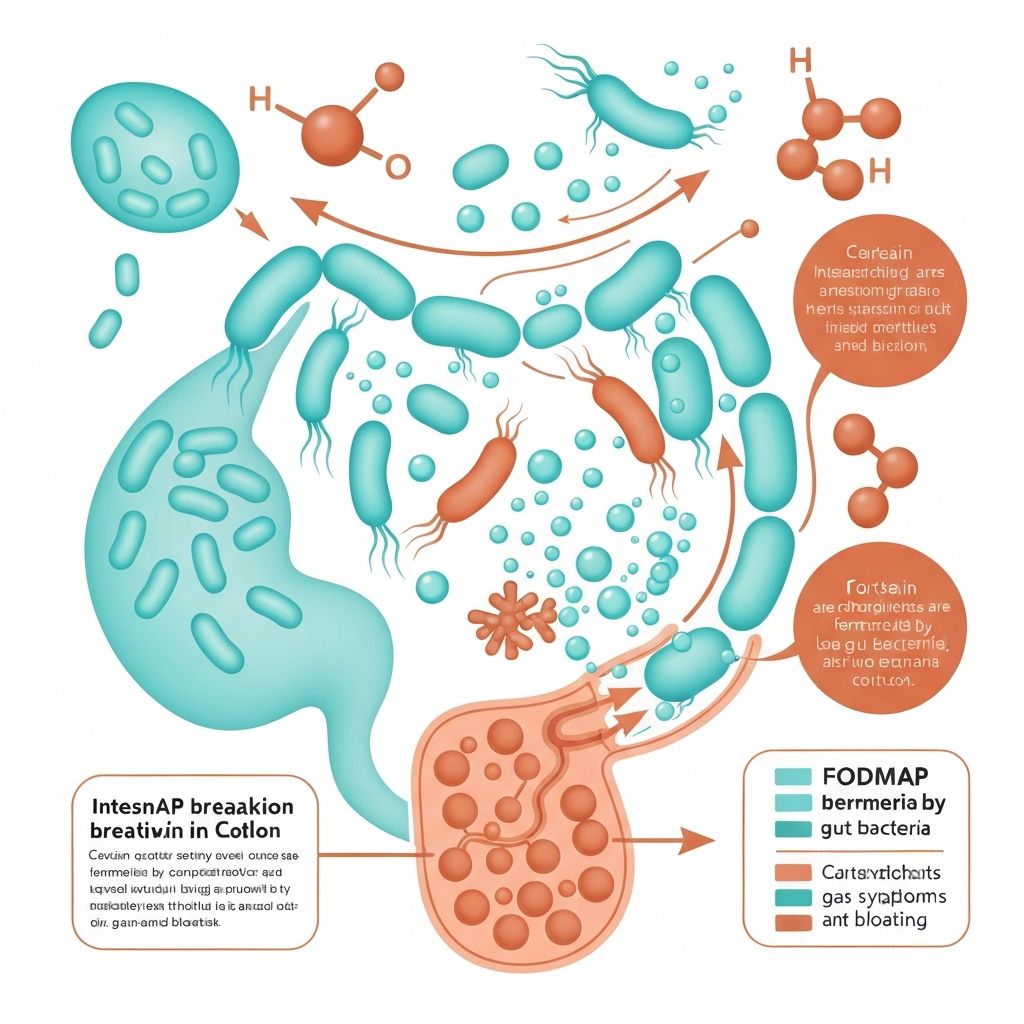
Intestinal fermentation process visualization

Overview of Intestinal Gas Production

Abdominal distension frequently results from gas accumulation in the gastrointestinal tract. Gas originates from two primary sources: aerophagia (swallowed air) and bacterial fermentation of undigested dietary substrates.

Gas Composition and Sources

Aerophagia introduces atmospheric air during eating, drinking, chewing, and speaking. Rapid eating, carbonated beverages, and excessive gum chewing increase aerophagia. Swallowed air primarily contains nitrogen (78%), oxygen (21%), and small amounts of carbon dioxide and argon.

Bacterial fermentation produces metabolic gases. Colonic bacteria anaerobically metabolize undigested carbohydrates through various fermentation pathways, producing short-chain fatty acids (acetate, propionate, butyrate) and gases (hydrogen, methane, carbon dioxide). The volume and composition vary based on substrate type, bacterial species, and fermentation efficiency.

Carbohydrate Digestion and Absorption

Complete carbohydrate digestion and absorption in the small intestine prevents colonic fermentation. However, several factors limit small intestinal carbohydrate absorption, allowing substrates to reach the colon.

Digestive Enzyme Capacity

Lactase hydrolyzes lactose to glucose and galactose. Lactase expression declines after infancy in many populations, resulting in lactose malabsorption. Insufficient lactase permits lactose passage to the colon where bacterial fermentation produces gas and osmotically active products.

Sucrase-isomaltase and maltase hydrolyze disaccharides. These enzymes typically maintain sufficient activity across the lifespan, though individual variation exists.

Fructose transporters (GLUT5) exhibit limited capacity, particularly in the distal small intestine. Fructose in excess of absorption capacity proceeds to the colon. Simultaneous glucose intake improves fructose absorption through SGLT1 glucose transporters facilitating fructose uptake via osmotic coupling.

FODMAP Categories and Fermentability

FODMAPs (Fermentable Oligosaccharides, Disaccharides, Monosaccharides, And Polyols) encompass carbohydrate classes with low small intestinal absorption rates and high colonic fermentability.

Oligosaccharides

Fructans (chains of fructose molecules with glucose residue) resist small intestinal digestion, reaching the colon intact. Wheat, rye, onions, garlic, and inulin supplements contain fructans. Galacto-oligosaccharides (GOS) similarly resist digestion, present in legumes, certain vegetables, and prebiotics.

Disaccharides

Lactose malabsorption affects individuals with lactase deficiency or insufficiency. Milk products, ice cream, and certain processed foods contain significant lactose. Lactose in the colon draws water osmotically (increasing bowel content volume) and undergoes bacterial fermentation.

Excess Monosaccharides

Fructose absorption becomes limited when consumed in excess of glucose. High-fructose fruits (mango, pear, apple), honey, and high-fructose corn syrup contain substantial fructose. When fructose exceeds GLUT5 transporter capacity, unabsorbed fructose reaches the colon where it draws water osmotically and undergoes fermentation.

Polyols

Sugar alcohols (sorbitol, xylitol, mannitol) are poorly absorbed and osmotically active. Stone fruits (peach, plum, apple), mushrooms, and sugar-free products contain polyols. Poor absorption permits colonic accumulation, drawing water osmotically and undergoing fermentation.

Bacterial Fermentation Pathways

Colonic bacteria metabolize undigested carbohydrates through various fermentation pathways, producing metabolic end-products and gases.

Primary Fermentation Products

Short-chain fatty acids (SCFAs) — acetate, propionate, and butyrate — represent primary fermentation products. SCFAs are absorbed, providing energy and contributing to colonic health. Butyrate particularly nourishes colonocytes and possesses anti-inflammatory properties.

Hydrogen gas accumulates when bacterial fermentation exceeds reabsorption capacity. Methanogenic archaea (methanogens) consume hydrogen, producing methane. However, not all individuals harbor methanogens; hydrogen-producing individuals lack methane in fecal gas.

Carbon dioxide forms from various fermentation steps and typically dissolves or is absorbed, contributing minimally to gas volume.

Fermentation Efficiency

Bacterial fermentation efficiency varies substantially across individuals. Some microbiota compositions produce large gas volumes from modest substrate quantities; others produce minimal gas from identical substrates. This reflects differences in bacterial enzyme expression, substrate preference, and metabolic efficiency. Rapid transit through the colon may limit fermentation time, reducing gas accumulation despite carbohydrate availability.

Individual Microbiota Variation

Gut bacterial composition fundamentally determines fermentative responses to dietary substrates. Individual microbiota variation explains why identical foods trigger different responses across individuals.

Factors Influencing Microbiota Composition

Genetics influences bacterial colonization patterns and relative abundance of specific taxa. Twin studies demonstrate heritable components of microbiota composition, though environmental factors play substantial roles.

Dietary history selects for bacterial populations capable of metabolizing regularly consumed foods. Individuals consuming high-fiber diets maintain diverse microbiota with efficient fermentative capacity. Refined diet consumption favors limited bacterial diversity and reduced fermentative efficiency.

Antibiotic exposure disrupts established microbiota composition. Broad-spectrum antibiotics reduce bacterial diversity, potentially favoring overgrowth of less beneficial taxa. Recovery requires months, and complete restoration of previous diversity may not occur.

Illness and infections transiently alter microbiota composition. Acute gastrointestinal infections disrupt established communities; recovery patterns vary individually.

Age influences microbiota composition. Infant microbiota transitions from milk-predominant bacteria toward diverse communities with weaning. Elderly microbiota often shows reduced diversity and altered metabolic capacity.

Bacterial fermentation mechanisms in colon

Transit Time and Gas Accumulation

Gastrointestinal transit time influences both fermentation extent and gas clearance. Rapid transit limits fermentation time; delayed transit permits extended fermentation and gas accumulation.

Small intestinal transit typically requires 2-4 hours; colon transit requires 24-72 hours. Rapid colonic transit reduces fermentation time and facilitates gas elimination through defecation. Delayed transit permits extended fermentation, gas accumulation, and increased distension sensation. Individual transit times vary substantially; hormonal, neurological, and anatomical factors influence motility. Stress accelerates transit in some individuals and delays it in others.

Gas Absorption and Clearance

Colonic gas does not accumulate indefinitely. The colon normally maintains gas volumes of 50-150 mL through ongoing absorption. Three primary mechanisms clear gas: passive diffusion across the colonic mucosa, bacterial gas metabolism, and elimination through defecation and flatulence.

Absorption Mechanisms

Diffusion gradients permit gas movement from colon lumen into mucosa. Hydrogen and methane diffuse across the epithelium when intraluminal partial pressures exceed blood levels. Oxygen and nitrogen gradients also facilitate absorption.

Bacterial consumption of hydrogen by methanogens and other anaerobic bacteria removes hydrogen gas, preventing accumulation. Individuals lacking methanogens maintain higher hydrogen levels, potentially contributing to different symptom patterns.

Defecation and flatulence eliminate accumulated gas. Colonic contractions propel gas anally. Anal sphincter function determines gas retention versus elimination; impaired sphincter control permits excessive flatulence; overactive sphincters may retain gas.

Research Observations on FODMAP Responses

Scientific research demonstrates substantial individual variability in gastrointestinal responses to FODMAPs. Some individuals experience significant distension from modest FODMAP quantities; others tolerate large amounts without symptoms.

Hydrogen breath testing reveals that many individuals malabsorb specific FODMAPs, yet distension symptoms show weak correlation with measured hydrogen production. This disconnect between objective gas production and subjective sensation reflects the importance of visceral sensitivity in symptom perception. Additionally, altered microbiota patterns in some individuals may reduce fermentative capacity despite FODMAP malabsorption, explaining why potential fermentable substrates do not consistently trigger symptoms.

Return to Blog